
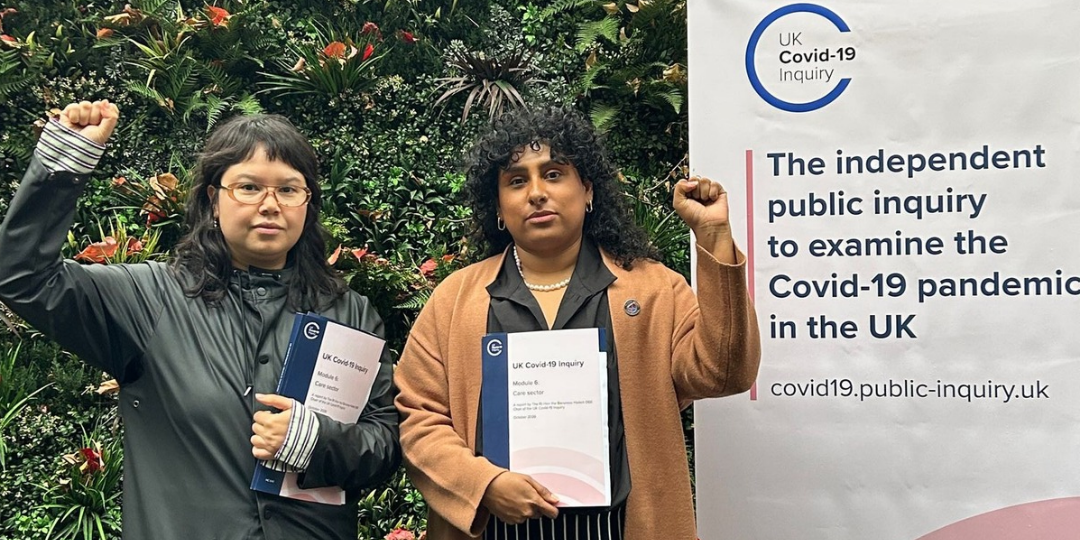
On 20 October 2026, the UK COVID-19 Inquiry published its Module 6 report on the care sector.
“By failing to address the disproportionate impact of the pandemic on migrant care workers, the Inquiry risks repeating the very injustice it was established to expose. Care workers came forward despite the emotional toll and trauma of reliving their experiences, hoping their testimonies would lead to meaningful change. To overlook their voices is a devastating wasted opportunity.
nelly ospino, UVW general secretary
Migrant workers kept care homes and private households running throughout the pandemic. Many were working for poverty pay, with inadequate protective equipment and little job security. Some of our members even had to source and make their own personal protective equipment (PPE). Yet the Inquiry’s report fails to properly recognise their contribution or confront the specific injustices they faced.
The COVID-19 Inquiry has recognised some of the failures in the care sector during the pandemic, including the need for full sick pay for workers who have to self-isolate. But when it comes to migrant care workers, who faced some of the greatest risks, the Inquiry has fallen seriously short.
UVW contributed evidence through the Frontline Migrant Health Workers Group (FMHWG), alongside the Independent Workers’ Union of Great Britain (IWGB) and migrant-led charity Kanlungan. We exposed how hostile immigration policies, exploitative employers and the privatisation of care put migrant workers at risk. We were represented by The Public Interest Law Centre (PILC).
The Inquiry acknowledges that fear over immigration status stopped some workers from self-isolating, seeking mental health support or accessing public services. It also recognises that a national register of care workers could deter migrants from working in the sector.
But acknowledging these problems is not enough. The report fails to properly address how employer-tied visas leave workers trapped with abusive employers, afraid to speak out, challenge unsafe conditions or leave their jobs. It also overlooks the experiences of domestic workers, many of whom were left working in private homes without adequate protection.
Nelly Ospino, General Secretary of UVW said:
Our members, predominantly low-paid migrant from Black and brown communities, cared for vulnerable residents and kept the care sector running, yet were too often abandoned to unsafe conditions, poverty pay and the inequalities of an outsourced system. Some of our members were even forced to source and make their own personal protective equipment (PPE) because adequate protection was not provided. Those who risked their lives to care for others were left to fend for themselves. Immigration status has made many even more vulnerable to exploitation and afraid to challenge abuse.
This is a deeply disappointing outcome. UVW will continue fighting for decent pay, safe working conditions, direct employment and a firewall between workers’ rights and immigration enforcement. Care workers deserve dignity, protection and justice — and when migrant workers rise, we all rise.”